
 GENEVA, Switzerland – March 13, 2026 — The Federated States of Micronesia (FSM) reaffirmed its commitment to safeguarding traditional knowledge (TK) and traditional cultural expressions (TCEs) during the 52nd Session of the Intergovernmental Committee on Intellectual Property and Genetic Resources, Traditional Knowledge and Folklore (IGC 52) at the World Intellectual Property Organization (WIPO).
The 52nd session of WIPO`s Intergovernmental Committee on Intellectual Property and Genetic Resources, Traditional Knowledge and Folklore (IGC) took place in Geneva Switzerland, from March 4-13 March 2026, with delegates and observers participating both in person and virtually.
As a new WIPO member, FSM highlighted the importance of international legal frameworks that recognize TK and TCEs as living and evolving systems central to cultural identity, environmental stewardship, and sustainable development. The FSM delegation emphasized that Micronesian knowledge systems are collectively held, transmitted across generations, and deeply intertwined with customary relationships to land, ocean, and natural resources.
“Traditional knowledge and cultural expressions are not relics of the past. They are living systems that guide how our communities interact with the ocean, land, and each other,” said Secretary Leonito Bacalando Jr., of the FSM Department of Justice. He noted that as a new WIPO member, FSM seeks to ensure that international standards protect the rights of FSM communities over their TK and TCEs while guiding the development of national policies that honor Micronesian customary systems.
Recognizing that FSM is in the early stages of developing national intellectual property laws, the delegation stressed the importance of international cooperation in supporting domestic frameworks that respect collective ownership and community control over TK and TCEs. The delegation also called for stronger transparency and disclosure measures related to genetic resources and associated traditional knowledge to prevent misappropriation.
The FSM delegation emphasized that protecting TK and TCEs is essential for sustainable cultural and creative economies, particularly for large ocean developing states whose heritage, biodiversity, and traditional practices are closely linked. The delegation urged enhanced technical assistance and capacity-building support to develop national institutions, policies, and legal frameworks that safeguard TK and TCEs while enabling community-led cultural industries.
IGC 52 marked the first session under the 2026–2027 WIPO negotiation mandate, focusing on revised draft articles for the protection of TK and TCEs. FSM reaffirmed its commitment to constructive participation in multilateral negotiations and to advancing international frameworks that uphold Indigenous rights, protect living cultural heritage, and strengthen sustainable development.
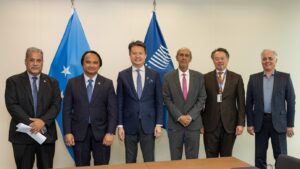
The FSM delegation also held bilateral discussions with the WIPO Director General Daren Tang for technical assistance support towards the establishment of a national intellectual property office. Representing the FSM were the H.E. Akillino H. Susaia, Ambassador and Permanent Representative of the FSM Embassy and Permanent Mission in Geneva, the Honorable Leonito Bacalando Jr., Secretary of FSM Department of Justice, and First Secretary Mr. Johnny Hadley Jr.
###