
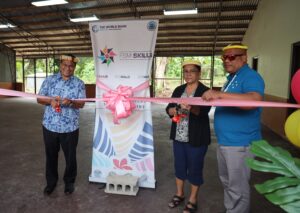
 DOLONIER, Pohnpei — January 28, 2026 — The Honorable Aren B. Palik, Vice President of the Federated States of Micronesia (FSM), joined educators, students, development partners, and government officials at the completion and operational handover ceremony of the Pacific Island Countries Schools (PICS) Agriculture Classrooms, marking a significant milestone in strengthening agricultural education and skills development in the FSM.
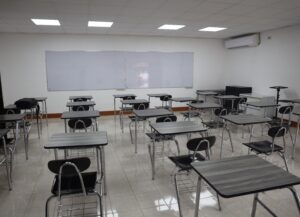 The ceremony celebrated the successful completion of newly constructed agriculture classrooms under the FSM Skills Employment Enhancement Project (SEEP), which aims to improve learning environments through practical, skills-based education while supporting food security and sustainable development.
In his remarks, Vice President Palik emphasized that the project represents a broader commitment to expanding opportunities for young Micronesians. “Today is about more than any single project. It is about the kind of choices we want our young people to have,” the Vice President said.
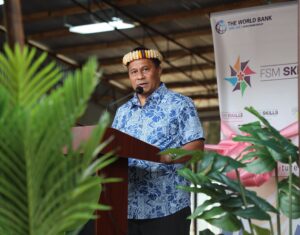 He further underscored the importance of vocational and technical education in national development, noting that skills-based learning plays a critical role in building resilient communities. “Skills, hands-on learning, and practical knowledge are crucial to nation building. With the right skills and technical training, our young people can build their future,” he added.
Addressing the students directly, Vice President Palik encouraged them to take ownership of the new facilities and to use them as a foundation for their aspirations. “This is your space. Dream big, work hard, and use these classrooms to build the future you want for yourselves, your families, and of course, our nation,” he said.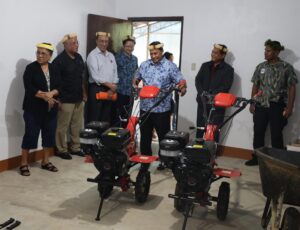
Also addressing facilitators and educators, the Honorable Stevenson A. Joseph, Governor of Pohnpei State, raised an important question, asking, “how do you utilize these facilities to put in our students’ minds what we expect them to learn, but most importantly what we expect them to take away from their learning and use it in their lives?”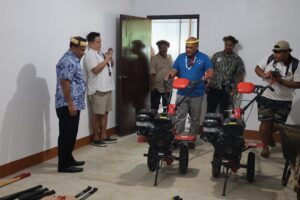
The agriculture classrooms are designed to support experiential learning, enabling students to apply classroom instruction through practical training in agriculture, sustainable farming practices, and resource management. The facilities are expected to enhance student engagement while equipping learners with skills relevant to local livelihoods and the broader economy.
“We are investing in the future of young people by creating spaces where they can learn practical life-changing skills. This building will provide hands-on training in modern farming techniques,” said Mr. Omar Lyasse, World Bank Resident Representative for the North Pacific.
The FSM Government extends its appreciation to the World Bank as a key development partner supporting this initiative and expressed its gratitude to all implementing agencies, including the FSM National Department of Education, for their leadership and commitment to advancing quality education.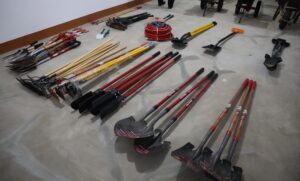
The FSM Government reaffirmed its commitment to working closely with development partners to invest in education initiatives that empower youth, strengthen food security, and promote sustainable development for future generations.
###
